Data-intensive Scalable Computing Laboratory (DiSC Lab)
Welcome to the DiSC Lab at UNLV
The DiSC Lab builds algorithms, systems, and learning methods for data that is too large, too irregular, or too incomplete for standard tools. Our center of gravity is graphs. Real networks are massive, dynamic, and rarely complete, whether they describe infrastructure, biology, society, or terrain. Incompleteness and noise degrade the accuracy of models trained on such graphs, while their size and irregularity expose the memory and communication limits of the systems that process them.
We work on both halves of that problem: graph neural networks that remain accurate when edges are missing, mislabeled, or deliberately removed to fit a memory budget, and distributed algorithms that keep analysis tractable once a graph exceeds the capacity of a single node. Not all of it is graphs. We take these methods to problems with a public stake, and we study language-model pipelines, where failures during data preparation stay invisible and propagate downstream.
Two principles guide how we evaluate our own results. When we approximate, we quantify the error rather than report the speedup alone. And we characterize the conditions under which a method degrades, not only the settings in which it performs best. Since many of our problems come from collaborators in geoscience, security, infrastructure, and bioscience rather than from standard benchmarks, those conditions are rarely hypothetical.
The lab is led by Dr. Shaikh Arifuzzaman and funded by the National Science Foundation, the U.S. Department of Energy, and UNLV. Development and evaluation take place largely on DOE leadership-class systems, through a continuing affiliation with Lawrence Berkeley National Laboratory. The lab supports researchers from Ph.D. candidates to high-school interns, several of whom have gone on to national laboratory internships.

Sponsors
- National Science Foundation (NSF): Award #2323533, #2616450
- US Dept. of Energy (DoE): DOE/LBL/UC Subaward #7551418 (Prime Award #DE-AC02-05CH11231), SRP-HPC Fellowship 2023, 2019.
- UNLV FOA/OSP/OED Internal: UNLV TTDGRA 26-26, FOA 23-25, SII Catalyst Grant 2025
Our research is supported in part by




Any opinions, findings, and conclusions or recommendations expressed in this material are those of the authors and do not necessarily reflect the views of the National Science Foundation, the U.S. Department of Energy, or any other sponsor.
Current Research Thrusts
Graph neural networks are increasingly deployed on graphs that are incomplete or adversarially perturbed. We quantify how much accuracy is lost and under which conditions, then design sparsification that preserves predictive quality under heavy edge reduction, along with topology-aware GNNs for network and IoT intrusion detection. A parallel effort on explainability traces model behavior back to graph structure rather than taking it on trust.
[ICMLA 2026]
[IEEE HPEC 2026]
[IEEE Access 2026]
Supported in part by NSF (#2323533, #2616450).
Graph computations resist parallelization: irregular access patterns, poor locality, and skewed degree distributions defeat the assumptions that let dense workloads scale. Distributed memory compounds the difficulty, since partitioning a graph across nodes introduces communication that frequently dominates the computation itself, and dynamic graphs add the further cost of maintaining results as the input changes. We design distributed-memory algorithms for graphs that exceed single-node capacity, including temporal triangle and square counting with provable error bounds, communication-aware shortest paths, real-time community detection, and streaming updates that trade accuracy for throughput. A related effort on AI-guided performance engineering uses learned cost models and GNN-based predictors to select kernel and block sizes, execution policies, and data layouts across CPU and GPU backends.
[ACM ICPP 2026]
[IEEE IPDPSW 2026]
[IEEE HPEC 2025]
[ACM TKDD 2020]
Supported by NSF EPSCoR RII Track-4 (#2323533) and DOE SRP-HPC.
Seismic hazard, urban heat, and epidemic spread share a common difficulty: the observational data is abundant, but the structure that governs it is not directly observed. We map global active faults from geoscience data, simulate urban resilience under extreme heat and infrastructure load, model epidemic spread in dense tourist destinations, and characterize the software dependency networks that critical systems rest on. Where the science supplies physical or geological constraints, we encode them in the model rather than relying on the data to recover them.
[J. SNAM 2025]
[Springer CCIS 2025]
[IEEE IECON 2024]
Supported by NSF CAIG (#2616450), UNLV TTDGRA, and UNLV FOA.
Language models fail quietly. A pipeline can appear healthy while producing plausible but incorrect output at every stage, with the error surfacing only downstream. We build benchmarks and preventive scaffolds for these silent risks in data preparation, and refine labels iteratively for biomedical temporal extraction. A longer-running line of work applies NLP and machine learning to social and digital media mining, and the same methods support our AI tools for STEM education.
[ICMLA 2026]
[ICMLA 2026]
[J. MLWA 2026]
[J. SNAM 2024]
Current Lab Members


Shubhashish Kar
PhD Student
Parallel and Approximation Algorithms; Dynamic Graphs

Ming Chen
PhD Student
AI Agents and ML Methods

Ashraful Alam Nirob
PhD Student
Dynamic Graphs; GNN; Anomaly Detection

Elakiya R. Sathiyamoorthi
MS Student
Full-stack AI/ML Devs

Aleisha Ortiz
BS Student
Algorithmic Complexity

Katya Alimov
BS Student
Graph ML
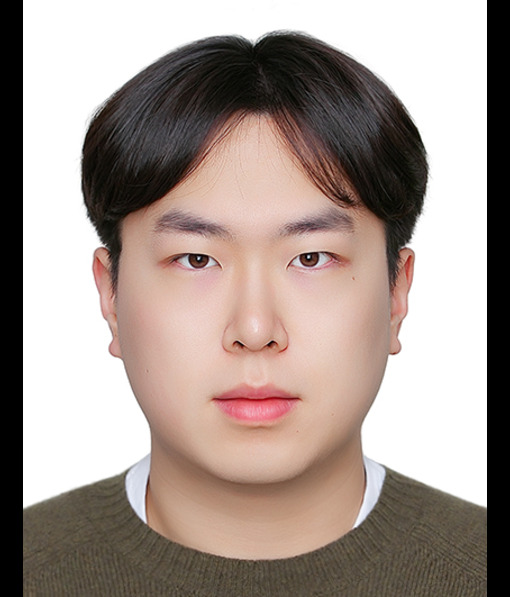
Keonsoo Lee
Intern- COE Intl. Prog. (Korea Aerospace Univ)
Data Curation for Language Models

Faaris Iqbal
Remote Intern- Purdue University
NLP and Computational Social Science

Krish Sharma
HS Intern
AI/ML Privacy and Security


Chan Lee, MS
Remote Research Intern
Knowledge Graphs and NLP for Health Data

Sophie Haque
Remote HS Intern
AI/ML Methods; Data Augmentation
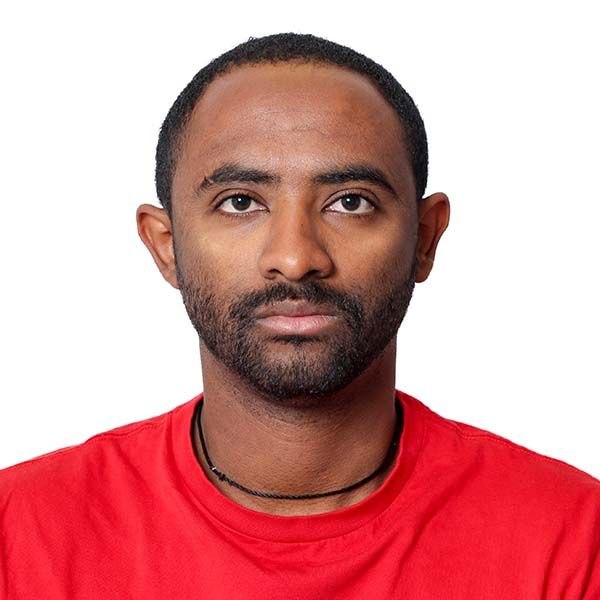
Eyob Berhe
MS Student
AI/ML Methods for Graph Anomaly Detection


Nitika Pathania, MS
Research Software Engineer
Graph Education Tools

Rishabh Kimothi, MS
Remote Research Intern
Graph Convolutional Networks
Past PhD Students

Postdoc: Texas State University
Currently, Faculty at Idaho State University

Postdoc: Oak Ridge National Lab
Currently, Faculty at Meharry Medical College, TN.
Past MS/BS/HS Students

Hasan Arikan
BS Student, Fall25

Prashant Rathore, MS/CS Sp25

Likhitha Pathpi, MS/CS Sp25

Abhishek A. Hossur, MS/CS Sm25

Kiran Yadav, MS/CS Sp25

Yashwanth Reddy, MS/CS Sp25

Venkata Naga Rajeev Pernapati, MS/CS Sp26

Soham Dhore, Intl. Intern/UG

Rajnandini Jadhav, Intl. Intern/UG

Unmesh Chakravarty, HS Intern (Now at Carnegie Mellon University)
Research Projects
-
Active faults drive seismic hazard, yet global fault inventories remain incomplete and inconsistently mapped. FaultNet develops graph neural network methods that integrate topographic, geodetic, and geologic evidence to identify and characterize active fault structures at global scale. UNLV is the lead institution on this collaborative award with the University of Kansas (PI: Michael Taylor), and the project funds two AI-focused Ph.D. students beginning Spring 2027.
-
Real graphs arrive incomplete: edges are missing, sampled away, or deliberately removed to fit a memory budget. SparseGNN measures how graph neural network accuracy degrades under different sparsification regimes, and designs kernel-aware sparsifiers that preserve the structural signal traversal kernels such as BFS and SSSP actually depend on. Across real-world and Graph500 Kronecker graphs of up to 59 million vertices and 129 million edges, we find that no single sparsifier is universally best: Common-Neighbor preserves connectivity most strongly, while Weight-Aware best preserves weighted shortest paths, with speedups of 3.30× for parallel BFS and 3.85× for Delta-Stepping SSSP. The benchmarks from this project also feed directly into the FaultNet learning pipeline.
-
Network intrusion detection is naturally a graph problem, but it is rarely clear which structural properties a GNN is actually keying on. GNN-Sec runs intervention studies that perturb topology in controlled ways to isolate what drives detection performance, with an emphasis on IoT and edge deployments where inference must be low-latency and interpretable.
-
Desert cities face compounding stress from extreme heat, water scarcity, and infrastructure load. UrbanRes builds a high-performance simulation framework that couples temporal graph neural networks with anomaly detection over infrastructure networks, so that cascading failures can be anticipated rather than reconstructed after the fact.
-
When a language model is embedded in a data pipeline, its failures are often silent: plausible output, quietly wrong. This project builds dual-axis benchmarks that surface those risks during data preparation, together with preventive scaffolds that catch them before they propagate. A companion line of work develops iterative silver-label refinement for temporal information extraction from biomedical text.
-

Real complex systems are inherently time-varying and can be modeled as temporal graphs (networks). Examples include social, transportation, and many forms of biological networks. Standard graph metrics introduced so far in complex network theory are mainly suited for static graphs, i.e., graphs in which the links do not change over time. In this work, we aim at designing scalable parallel algorithms for mining large time-varying networks. Thanks to our collaborator from Performance and Algorithms Group at Berkeley Lab.
-

The Parallel and Scalable Path-Related Techniques (PaSPrT) project addresses key challenges in graph optimization, such as finding the shortest paths, computing minimum spanning trees, and solving other path-related problems in large-scale networks. These problems have significant applications in areas like transportation networks, communication systems, and infrastructure planning. Our work focuses on developing cutting-edge algorithms that utilize parallel and distributed computing to efficiently solve these path-related problems, making them tractable even in massive graphs. With PaSPrT, we aim to advance the state-of-the-art in scalable path-related techniques for graph algorithm optimization.
-

The Parallel and Resilient Subgraph Matching (PRISM) project tackles one of the fundamental challenges in graph analysis: efficiently finding and counting subgraphs in massive networks. This problem has a broad range of applications, from detecting social network communities to analyzing biological pathways. Our approach focuses on developing innovative, high-performance algorithms that leverage parallel and distributed computing to make subgraph matching and enumeration feasible at large scales. By exploiting data-intensive computing techniques, PRISM aims to push the boundaries of complex network analysis.
-

Complex systems are organized in clusters or communities, each having distinct role or function. In the corresponding network representation, each functional unit (community) appears as a tightly-knit set of nodes having a higher connection inside the set than outside. Finding communities may reveal the organization of complex systems and their function. We are currently working on designing parallel scalable algorithms for detecting communities in large-scale networks.
-

The AI-Orchestrated Performance Engineering (AI4Perf) project deals with the blend of artificial intelligence and high performance computing. It also covers the problems of performance portability in different architectures. To tune the configuration parameters both for algorithms and hardware architectures, the project aims to develop data-intensive machine learning solution based on the data generated by different graph algorithms.
-

This project aims to unravel the complex dynamics of epidemics in urban settings by leveraging data-driven social network analysis. By identifying key hubs within urban social networks, Epi-HUB seeks to pinpoint critical nodes that contribute to the spread of infectious diseases. This approach helps guide effective mitigation efforts, providing valuable insights into how targeted interventions can curb epidemic outbreaks and protect urban populations.
-

Some of the works include: Twitter sentiment analysis and covid vaccination rate prediction; Semi-supervised community detection using graph convolutional network; Data parallel large deep neural netowrk on GPUs; Predictive model for web spam detection.
Past Projects
Completed efforts, retained for reference.
-

We are investigating hardware design implications for several scientific data analytics kernels. Thanks to our collaborators from the Computer Architecture Group of LBNL.
-
 Counting triangles in a network is an important algorithmic problem arising in the study of complex networks. An efficient solution to the triangle counting problem can also lead to efficient solutions for many other graph-theoretic problems, e.g. computation of clustering coefficient, transitivity, and triangular connectivity. Further, triangle counting has important applications in graph analysis. We design efficient parallel algorithms for counting triangles.
* Note that the above code is a research code and is intended for friendly use. The authors will try their best to address any questions/queries/issues. Users are advised to contact with the authors for any newer (or optimized) version of the code. However, for most general use cases, the provided code should suffice. -

In this project, we identify several popular network visualization tools and provide a comparative analysis based on the features and operations these tools support. We demonstrate empirically how those tools scale to large networks. We also provide several case studies of visual analytics on large network data and assess performances of the tools.